
A backyard feels far more relaxing when it doesn’t seem completely exposed to every neighboring window, sidewalk, or passing car. Fortunately, creating privacy doesn’t always mean putting up a solid wall or tall fence. Plants, screens, fabric, and a few strategic design choices can soften sightlines while keeping the space open and inviting. The best solutions tend to blend into the yard naturally, adding both comfort and character without making the area feel closed in.
Use Tall Planters to Block Key Sightlines
Large planters are one of the easiest ways to create privacy exactly where you need it. They work especially well around patios, decks, hot tubs, or seating areas because they can interrupt a direct line of sight without enclosing the entire yard.
Choose tall grasses, compact evergreens, bamboo varieties suited to containers, or upright shrubs that provide enough height without spreading too aggressively. Using several matching planters can create a cleaner, more intentional look, while mixed containers feel more relaxed. Make sure the plants suit the available sunlight and climate so they stay healthy. Planters also have the advantage of being movable, which makes them ideal for renters or anyone who wants a flexible layout.
Add a Trellis With Climbing Plants
A trellis can provide structure without the visual heaviness of a solid barrier. Placed beside a seating area or along an exposed edge, it creates a defined boundary while still allowing light and air to pass through.
Climbing plants can soften the structure and add another layer of screening over time. Clematis, jasmine, climbing roses, or other region-appropriate vines can work well depending on the growing conditions. If you want quicker coverage, choose a larger trellis or pair it with planters at the base. Keep mature plant size in mind before planting, since vigorous vines may need regular trimming. A planted trellis can feel more like part of the garden than a privacy feature.
Hang Outdoor Curtains Around a Patio
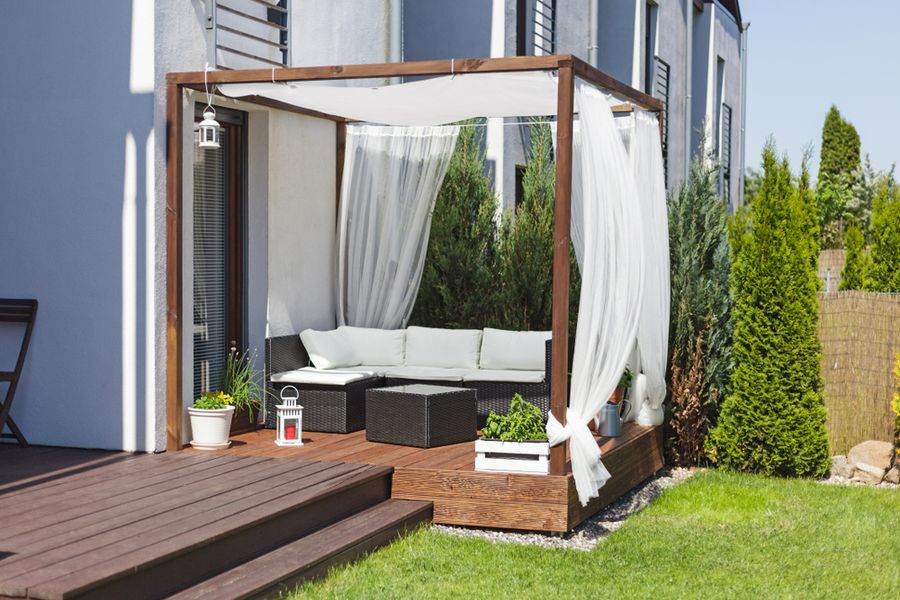
Outdoor curtains can make a covered patio, pergola, or porch feel far more private without permanently closing it off. They’re especially useful when exposure comes from one specific direction, such as a neighboring deck or side yard.
Look for fabric designed for outdoor conditions so it can handle sun and occasional moisture more reliably. Curtains can be tied back when privacy isn’t needed and closed when the area feels too exposed. Neutral fabrics create a softer look, while subtle patterns can add personality. Make sure the panels are secured well enough that wind won’t send them constantly blowing across the space. The effect can feel surprisingly polished while also making the seating area feel more intimate.
Create Layers With Trees and Shrubs
Privacy planting doesn’t have to look like a straight hedge. Layering small trees, shrubs, grasses, and lower plants can create a more natural screen while giving the yard extra depth.
Start with taller plants toward the back, then fill in with medium and lower-growing varieties. Mixing heights and textures often looks more relaxed than using one species in a rigid line. Evergreen plants can provide year-round coverage, while deciduous trees and flowering shrubs add seasonal interest. Before planting, check mature height and width so the area doesn’t become overcrowded. A layered planting plan takes longer to establish, but it can create privacy that feels organic rather than imposed.
Use Freestanding Privacy Screens
Freestanding screens are a good option when you want immediate privacy without permanent construction. Slatted wood panels, metal screens, woven panels, and decorative outdoor dividers can all block a view while still feeling lighter than a wall.
Place screens only where they’re needed most, such as behind a dining table, beside a lounge chair, or near an outdoor shower. Partial screening often feels more comfortable than surrounding the entire yard. Decorative cutouts or slats can help light move through the structure so the space doesn’t feel boxed in. Depending on local conditions, screens may need to be anchored securely to withstand wind.
Rearrange the Layout to Reduce Exposure
Sometimes privacy can improve without adding anything at all. The orientation of furniture can make a big difference in how exposed a seating area feels. Turning chairs or a sofa away from neighboring windows can shift the focus inward and reduce the feeling of being watched.
Use larger furniture, planters, or an outdoor console to help define the back edge of a seating zone. Positioning the main gathering area closer to the house can also make it feel more protected than placing it in the middle of an open yard. Before buying a screen or planting a hedge, sit in the space and identify exactly where the unwanted sightline comes from. A small layout change may solve more than expected.
Privacy Works Best When It Feels Natural
A private backyard doesn’t need to feel sealed off from the world. The goal is usually to block a few uncomfortable views while preserving light, airflow, and the open quality that makes outdoor spaces enjoyable in the first place.
Focus on the areas where privacy matters most, then choose a solution that fits the style and scale of the yard. Plants, curtains, trellises, screens, and smarter furniture placement can all create a more comfortable retreat without building a wall. When the screening blends into the overall design, it feels less like a barrier and more like part of the landscape.