

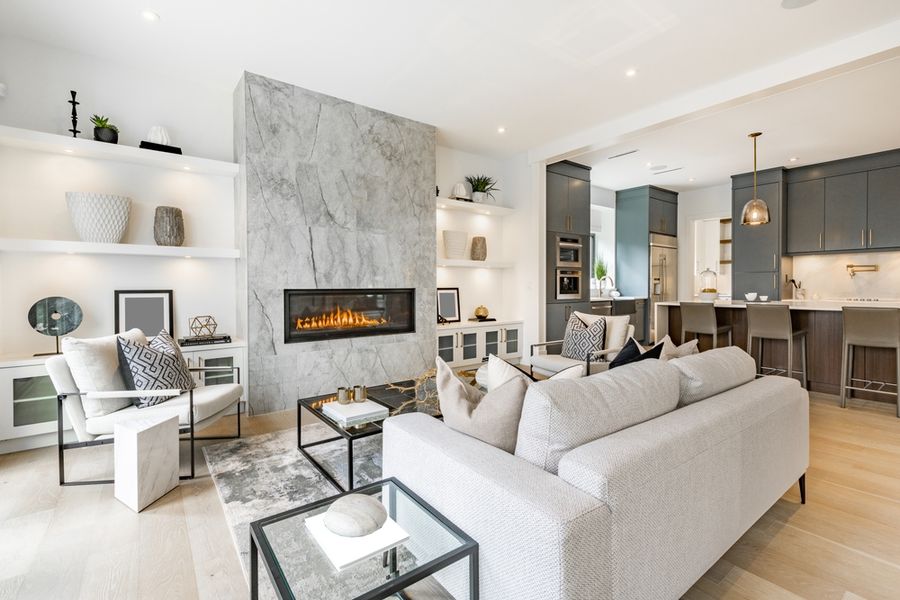
A room can have beautiful furniture and still feel slightly off. Usually, the problem isn’t the individual pieces but the way they relate to one another. Scale, placement, repetition, and visual balance all play a role in making a space feel polished. Luckily, a few reliable decorating rules can help pull everything together without making the room look overly styled. The best part is that most of them don’t require buying much at all.
Make Sure the Rug Anchors the Furniture
A rug should connect the furniture rather than float by itself in the middle of the room. In a living area, the front legs of the sofa and chairs should usually sit on the rug, and a larger rug that extends beyond the seating often makes the whole arrangement feel more substantial.
Too-small rugs can make even nice furniture look disconnected. Before buying, measure the seating area rather than the entire room and use painter’s tape to outline the rug size on the floor. In a bedroom, the rug should extend far enough beyond the sides of the bed to feel intentional. The right scale creates a visual foundation that helps the rest of the room fall into place.
Group Decor in Odd Numbers
Accessories often look more natural when they’re grouped in odd numbers, especially sets of three. A lamp, stack of books, and small object can feel more balanced than two matching pieces placed side by side. The arrangement creates enough variation to hold the eye without looking cluttered.
The pieces shouldn’t all be the same height or shape. Mix tall, medium, and low objects so the display has movement. The same idea can work with vases, candles, framed photos, or decorative bowls. Odd-number groupings aren’t a strict law, but they’re a useful starting point when a shelf, coffee table, or console feels awkward and you’re not sure why.
Hang Artwork at the Right Height
Artwork can make a room feel unfinished when it’s hung too high or seems disconnected from the furniture below it. In most cases, art should relate visually to whatever it’s hanging above, whether that’s a sofa, console, bed, or fireplace.
A common rule is to keep the center of the artwork around eye level, but furniture placement matters too. When hanging art over a sofa or headboard, leave enough space to create separation without making the piece feel like it’s floating. Large walls often need larger artwork or a well-planned gallery rather than several tiny frames scattered across the surface. Proper scale and placement can make inexpensive art look far more considered.
Repeat Colors and Finishes Around the Room
Rooms tend to feel more cohesive when key colors or materials appear more than once. A black lamp can connect with a black picture frame, while a warm wood tone can repeat in a coffee table and smaller accessories. Repetition creates a visual thread without requiring everything to match.
The trick is keeping it subtle. Two or three repeated elements are often enough to make the room feel coordinated. The same principle works with accent colors. If a muted blue appears in a rug, a cushion, and a piece of artwork, the room starts to feel intentional. Repetition helps separate pieces read as part of one larger design rather than unrelated purchases.
Pay Attention to Scale
Many decorating problems come down to scale. A tiny lamp on a large console, a small coffee table with a deep sofa, or undersized art above a wide bed can make a room feel unbalanced even when each item looks good on its own.
Look at how the pieces relate to one another rather than judging them individually. Larger furniture can usually handle larger accessories, lighting, and artwork. Smaller rooms don’t necessarily need tiny decor, either. One substantial piece often looks cleaner than several undersized ones. When the proportions feel right, the room gains a sense of confidence that’s hard to achieve through decoration alone.
Leave Some Empty Space
Not every wall, shelf, and tabletop needs to be filled. Negative space gives the eye somewhere to rest and helps the pieces you do display feel more important. Rooms often look more polished after a few items are removed rather than added.
Try editing one surface at a time. If a console has six accessories, remove two or three and see whether the remaining arrangement feels stronger. The same goes for shelves and walls. Leaving open areas creates contrast and keeps the room from feeling visually noisy. Good decorating is often as much about restraint as it is about adding personality.
A Polished Room Usually Comes Down to Balance
Putting a room together isn’t about following dozens of strict rules. It’s about noticing how the pieces relate, then making small adjustments so the space feels balanced and connected. Rug size, artwork height, scale, repetition, and thoughtful groupings can make a bigger difference than buying new furniture.
When something feels off, look at proportion and placement before shopping for another accessory. A rug moved a few inches, a piece of art lowered on the wall, or a cluttered surface pared back can completely shift the room. Small changes often create the most convincing sense of polish.