

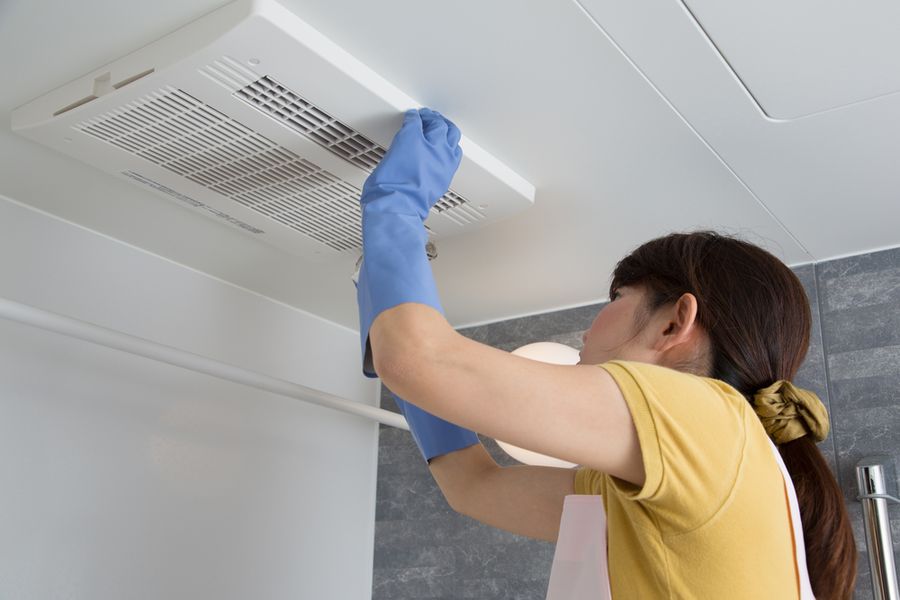
A bathroom fan can seem like a small detail until steam starts lingering, mirrors stay fogged, or the room develops a damp smell. Poor ventilation can make the whole space feel uncomfortable and may allow excess moisture to hang around longer than it should. Sometimes the fix is as simple as cleaning a dusty cover. Other times, weak airflow or unusual noises can point to a problem deeper in the fan or ductwork.
Start by Cleaning the Fan Cover
Dust builds up on bathroom fan covers faster than many homeowners realize, and a clogged grille can restrict airflow before the motor itself has a problem. If the fan sounds normal but doesn’t seem to clear steam as well as it used to, the cover is a good place to start.
Turn the fan off, remove the grille if the design allows it, and vacuum away loose dust. Wash the cover with mild soap and water if the manufacturer permits it, then let it dry completely before reinstalling. While the cover is off, use a vacuum attachment to remove visible dust around the housing without disturbing wiring or internal components. A simple cleaning can sometimes restore noticeably better airflow.
Check Whether the Fan Is Actually Moving Air
A fan can make noise without moving much air, so it helps to test its performance rather than relying on sound alone. Hold a square of toilet paper or a lightweight tissue near the grille while the fan is running. A working fan should usually hold it against the cover with noticeable suction.
If the tissue barely moves, airflow may be restricted by dust, a clogged duct, a stuck exterior vent flap, or a weakening motor. If the fan passes the test but the room still stays steamy for a long time, the unit may be undersized for the bathroom. Airflow problems can come from several places, so the test is best used as a clue rather than a full diagnosis.
Listen for New or Unusual Noises
Bathroom fans aren’t silent, but a sudden rattling, grinding, buzzing, or squealing sound deserves attention. Loose covers and mounting hardware can cause vibration, while worn bearings or a failing motor may produce harsher mechanical noises.
Turn the fan off before inspecting anything. Tighten a loose grille or visible screw only if it’s safely accessible and clearly part of the cover assembly. If the noise seems to come from the motor itself, replacement may make more sense than repair, especially with an older unit. Persistent buzzing can also signal an electrical issue, which is a good reason to stop using the fan and call a qualified electrician.
Look for a Blocked or Restricted Vent
The fan has to send moist air somewhere, usually through a duct that vents outdoors. If that path is blocked, the fan may run but still fail to clear humidity effectively. Debris, lint, nesting material, or a stuck exterior damper can all interfere with airflow.
Check the exterior vent from the ground if it’s visible and safe to inspect. The flap should open when the fan runs and close when it’s off. If it stays shut, moves only slightly, or appears blocked, the duct may need cleaning or repair. Roof vents and hard-to-reach exterior outlets are better left to a professional rather than accessed from a ladder without the proper equipment.
Make Sure the Fan Is Venting Outside
Older or poorly installed bathroom fans sometimes vent into an attic or another enclosed space instead of outdoors. That setup moves moisture out of the bathroom but leaves it trapped elsewhere in the house, where it can create a different set of problems.
If you suspect the fan isn’t vented properly, an HVAC contractor or qualified home professional can inspect the duct route. The exhaust should terminate outdoors through an appropriate roof or wall vent. Correcting the duct path can improve performance and reduce moisture buildup in hidden areas. A fan can only do its job properly when the air has a clear and appropriate place to go.
Know When Replacement Makes More Sense
Sometimes a fan simply reaches the end of its useful life. If the unit is noisy, weak, frequently stops working, or has already been cleaned and checked without improvement, replacement may be the most practical option.
Newer fans are often quieter and more efficient, and some include humidity sensors, timers, or integrated lighting. The right size depends on the bathroom, so choose a model with enough airflow for the room rather than replacing the old one with the exact same capacity automatically. Because replacement can involve wiring and duct connections, professional installation is often the safest choice when the job goes beyond a simple cover or motor insert swap.
Good Ventilation Is Worth Fixing Early
A bathroom fan doesn’t need to be loud or dramatic to be important. Its job is to remove moisture before that humidity has time to linger on walls, ceilings, mirrors, and fixtures. When performance drops, small signs like fogged glass or a musty smell can be useful warnings.
Start with the easiest checks, including the cover, airflow, and visible vent opening. If cleaning doesn’t help or the fan shows signs of motor, wiring, or duct problems, bring in a professional. Restoring proper ventilation can make the bathroom more comfortable and help the whole space stay in better condition.