

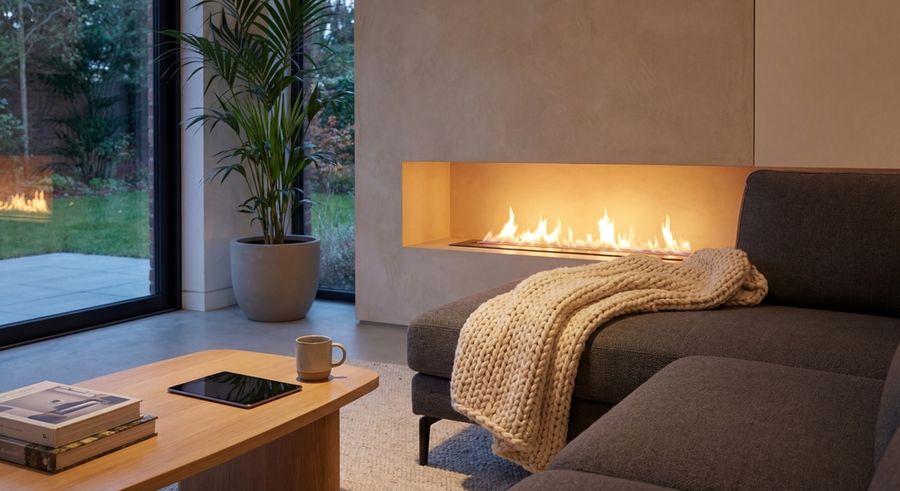
A cozy room doesn’t need shelves packed with decor or every surface covered in accessories. Warmth often comes from how a space feels rather than how much it contains. Lighting, texture, color, layout, and a few thoughtful details can make a room feel inviting without tipping into clutter. The goal is to create softness, depth, and comfort while still leaving enough visual breathing room for the space to feel calm.
Layer the Lighting Instead of Relying on One Fixture
Overhead lighting alone can make a room feel flat, especially when the bulbs are bright or cool-toned. Layered lighting creates a softer atmosphere by combining several sources at different heights. Table lamps, floor lamps, sconces, and accent lighting can all help create pockets of warmth throughout the room.
Pay attention to bulb temperature as well as fixture style. Warm light usually feels more relaxing than stark white light, particularly in bedrooms and living rooms. Dimmers can also help adjust the mood as daylight changes. Instead of flooding the entire room with one source, use smaller pools of light to create depth. A well-lit room can feel cozy with surprisingly little decor.
Use Textiles to Add Softness
Textiles are one of the easiest ways to make a room feel warmer without adding visual clutter. Rugs, curtains, throws, upholstered furniture, and cushions soften hard surfaces and help absorb sound, which can make a space feel more comfortable almost immediately.
The key is layering without overdoing it. A wool rug, linen curtains, and one textured throw may be enough to create interest. Mix materials rather than piling on lots of separate pieces. Bouclé, cotton, velvet, knit, linen, and woven fabrics all bring a different kind of softness. Keeping the color palette fairly cohesive allows the textures to stand out without making the room feel busy.
Choose Warm, Grounded Colors
Color can shape the mood of a room even when the furnishings are minimal. Warm neutrals, muted greens, soft browns, clay tones, and gentle creams often create a more inviting atmosphere than stark white or overly cool gray.
You don’t need to repaint the entire room to get the effect. A warmer wall color, deeper curtains, or a richer rug can shift the mood significantly. Look for colors that feel calm rather than overly bright. Even darker shades can work well in a cozy space if the lighting is balanced. The goal is to create a palette that feels settled and comfortable rather than visually loud.
Arrange Furniture for Conversation and Comfort
A room can feel cold when furniture is pushed too far apart or arranged only around the television. Pulling seating closer together can make the space feel more intimate without adding anything new. A sofa and chairs that face one another tend to create a stronger sense of connection.
Leave enough space for movement, but avoid large empty gaps that make the room feel disconnected. A coffee table or ottoman can help anchor the seating area, while a rug can visually pull everything together. Even shifting furniture a few inches can improve the atmosphere. Cozy rooms often feel intentional because the layout encourages people to settle in rather than just pass through.
Bring in Natural Materials
Wood, stone, rattan, wool, and other natural materials add warmth because they introduce texture and variation. Even one or two pieces can keep a room from feeling overly polished or sterile. A wooden side table, woven basket, or stone lamp base can bring more character without creating clutter.
Natural finishes work especially well when the rest of the room is simple. Instead of adding more decorative objects, choose functional pieces made from materials that already have visual interest. A grainy wood table can do the work of several accessories, while a woven shade can soften both light and texture at once. Let the materials carry some of the decorative weight.
Keep Decor Intentional
Cozy doesn’t mean crowded. A small number of meaningful objects often has more impact than dozens of decorative pieces. Books, framed photos, ceramics, artwork, and plants can all add personality when they’re given enough space to stand out.
Try grouping items rather than spreading them across every surface. A stack of books and a small lamp on one table can feel more deliberate than scattered objects throughout the room. Leave some shelves and tabletops partially empty. That negative space helps the room feel calmer and makes the pieces you do display feel more important. Comfort comes from personality, not quantity.
Warmth Comes From How the Room Feels
A cozy room doesn’t need to be full. It needs to feel layered, balanced, and comfortable. Soft lighting, textured fabrics, warm colors, natural materials, and thoughtful furniture placement can create plenty of warmth without sacrificing simplicity.
Start with the elements that affect the atmosphere most, especially lighting and textiles, then add only what the room actually needs. When each piece has a purpose, the space can feel welcoming without feeling crowded. Often, the most comfortable rooms are the ones that leave a little room to breathe.