

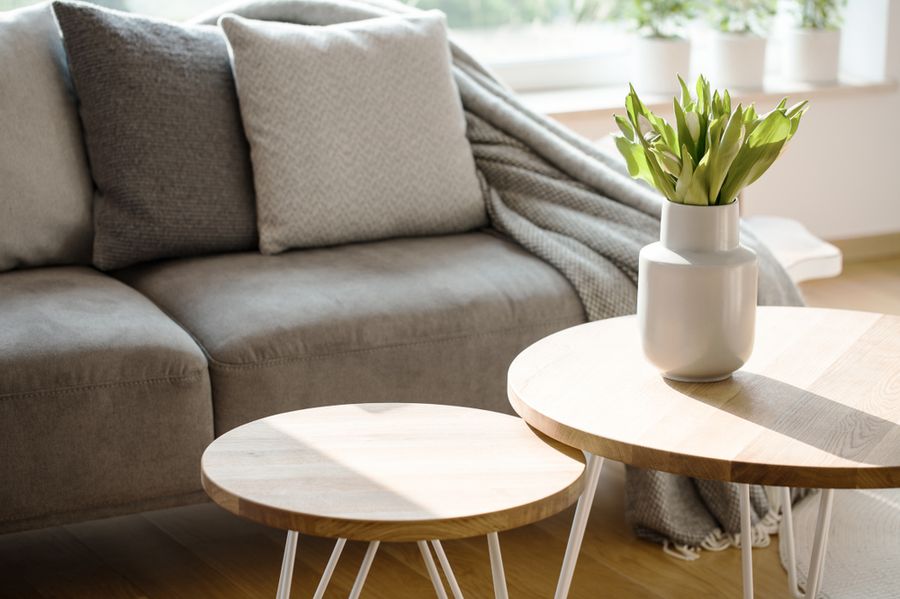
Small rooms can feel surprisingly comfortable when the proportions, layout, and visual balance are working in their favor. Problems usually start when too many pieces compete for attention or when furniture and decor interrupt the room’s natural flow. A compact space doesn’t need to feel sparse, but every choice carries more weight. Avoiding a few common design missteps can make the room feel calmer, lighter, and far easier to live in.
Using Furniture That’s Too Small
It sounds logical to fill a small room with tiny furniture, but that approach can actually make the space feel more cramped. Too many undersized pieces create visual clutter and can make the room look fragmented. A small sofa, several little tables, and a handful of narrow storage pieces often take up more visual space than one or two appropriately scaled items.
Instead, choose fewer pieces with stronger proportions. A properly sized sofa, a substantial coffee table, or one taller storage unit can give the room a more grounded look. The goal isn’t to oversize everything, but to avoid creating a dollhouse effect. Larger pieces can work beautifully in compact rooms when they’re placed carefully and leave enough open floor area around them.
Pushing Every Piece Against the Walls
Many people automatically line furniture around the perimeter of a small room, hoping it will open up the center. Sometimes it works, but it can also make the layout feel stiff and emphasize the room’s limited dimensions. A ring of furniture around the walls often leaves an awkward empty patch in the middle without improving how the room functions.
Try creating a more intentional arrangement instead. Floating a chair slightly away from the wall or pulling a sofa forward a few inches can make the setup feel less cramped. In living rooms, furniture should support conversation and movement rather than simply hug the edges. Even a small amount of breathing room around a piece can make the layout feel more considered.
Choosing the Wrong Rug Size
A rug that’s too small can visually chop up a room and make everything around it feel disconnected. In a compact living area, a tiny rug floating beneath the coffee table often makes the furniture look like separate pieces rather than one cohesive arrangement.
A larger rug can actually make a small room feel more expansive because it creates one continuous visual zone. Ideally, at least the front legs of major furniture pieces should sit on the rug. In bedrooms, a rug that extends beyond the sides of the bed usually feels more generous than a narrow strip beneath it. Scale matters, and choosing a rug that anchors the room can make the whole layout feel calmer.
Hanging Curtains Too Low or Too Narrow
Window treatments can quietly shrink a room when they’re installed without enough height or width. Curtains hung directly above the window frame can make the ceiling feel lower, while panels that barely extend past the glass can reduce the amount of visible light.
Mounting the rod higher and wider can create a more open effect. Hanging curtains closer to the ceiling draws the eye upward, and extending the rod beyond the window frame lets the panels sit mostly against the wall when open. That allows more daylight into the room and can make the window appear larger. Floor-length panels usually create a cleaner line than short curtains, especially in small bedrooms and living spaces.
Filling Every Surface With Decor
Small rooms don’t leave much room for visual clutter. When shelves, side tables, windowsills, and walls are all packed with objects, the eye has nowhere to rest. Even beautiful accessories can make a compact space feel crowded when too many are competing for attention at once.
Edit displays rather than eliminating personality. A few larger objects often look more intentional than a collection of tiny pieces. Leave some empty space on shelves and tabletops, and group similar items together rather than scattering them throughout the room. Artwork can follow the same principle. One substantial piece may have more impact than several small frames squeezed onto every available wall.
Ignoring Vertical Space
When floor area is limited, walls are valuable real estate. Rooms can feel more crowded when every storage need is handled with low cabinets, baskets, or furniture that spreads horizontally across the floor. Ignoring the upper half of the room also wastes an opportunity to draw the eye upward.
Tall shelving, wall-mounted storage, and vertical artwork can help the space feel more balanced. A bookcase that reaches toward the ceiling often provides more storage while taking up roughly the same footprint as a shorter unit. Wall-mounted lighting can also free up table space. Using height thoughtfully gives the room more function without forcing additional furniture into an already tight layout.
Give the Room More Breathing Space
A small room doesn’t need to pretend it’s bigger than it is. Good design is more about making the available space feel balanced, comfortable, and easy to move through. Scale, placement, and visual simplicity often matter far more than the room’s actual square footage.
Before adding another piece of furniture or decorative object, look at what the room already has. Removing one unnecessary item, raising the curtains, or choosing a better-sized rug can sometimes do more than a complete redecorating project. When every element has enough room to work, a compact space can feel intentional rather than constrained.